
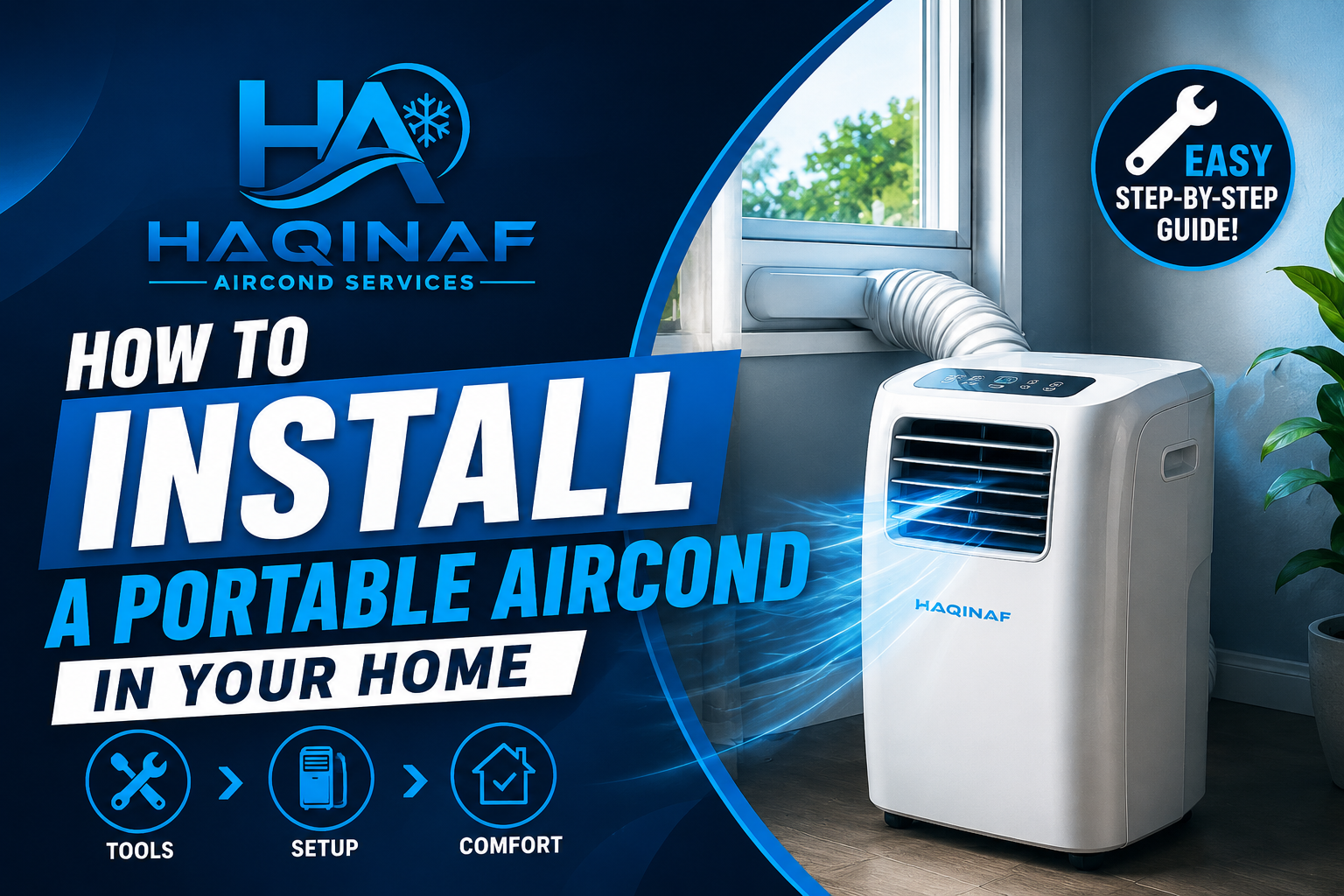
How to Install a Portable Aircond in Your Home
You’ve got a brand-new portable air conditioner sitting in a box in your living room — and the summer heat is already creeping in. Sounds familiar? Here’s the good news: portable air conditioner installation is one of the easiest home setup tasks you can do yourself, even with zero handyman experience. No ductwork, no permits, and definitely no expensive HVAC technician required.
Whether you’re cooling a bedroom, living room, apartment, or home office, this complete guide will walk you through everything — from unboxing to optimizing airflow. We’ll cover the standard window kit installation, explore venting alternatives for rooms without windows, share the most common mistakes homeowners make, and give you a checklist so you never miss a step.
💡Quick Answer
Most portable AC units can be installed in under 30 minutes using the included window kit. The process involves: positioning the unit, connecting the exhaust hose, installing the window adapter, and sealing any gaps. That’s it!
1. What You Need Before You Start
The beauty of portable AC installation is that almost everything comes in the box. Still, having a few extra supplies on hand makes the job cleaner and faster.
Standard Kit Contents (Usually Included)
- ✔Portable air conditioner unit
- ✔Exhaust hose (5–7 ft, accordion-style)
- ✔Window slider kit / window adapter bracket
- ✔Hose connector adapters (for both ends)
- ✔Window seal panel (extendable, fits most window types)
- ✔Remote control and user manual
Optional Tools That Help
- Foam weatherstripping tape — seals gaps the kit doesn’t fully cover
- Scissors or a utility knife — to cut the foam or tape
- Measuring tape — to check window width vs. kit panel range
- A power strip or extension cord — make sure it’s rated for the unit’s wattage
⚠️Safety First
Portable air conditioners draw 1,000–1,500W. Always plug directly into a grounded wall outlet — never into a standard extension cord or power strip. Most models require a dedicated 15A or 20A circuit.
| Item | Purpose | Provided? |
|---|---|---|
| Exhaust hose | Removes hot air from the room | ✅ Yes |
| Window slider panel | Blocks open window space | ✅ Yes |
| Hose connectors | Attaches hose to unit and window kit | ✅ Yes |
| Foam tape / weatherstripping | Seals remaining gaps for efficiency | ❌ Buy separately |
| Drain hose (some models) | Continuous water drainage | ⚠️ Check your model |
| Window bracket extender | For extra-wide windows | ❌ Buy if needed |
2. How a Portable AC Works — and Why Venting Matters
Before diving into installation steps, a quick understanding of the mechanics will help you make smarter decisions about placement and venting.
A portable air conditioner works just like any refrigerant-based cooler: it pulls warm air from the room over an evaporator coil, cools it, and pushes the cold air back into the room. But in the process, it generates hot exhaust air — and that heat needs somewhere to go. That’s what the exhaust hose is for.
If you run a portable AC without venting the exhaust hose, the unit simply recirculates warm and cool air in the same room — it won’t actually lower the temperature. Proper venting is the single most critical step in portable AC setup.
3. Step-by-Step: Portable AC Installation
Here’s the full portable air conditioner installation process — from unboxing to first cool blast. Most homeowners complete this in under 30 minutes.
1 Unbox and Inspect the Unit
Remove all packaging materials. Inspect for any shipping damage. Let the unit stand upright for at least 30 minutes if it was on its side during delivery — this lets refrigerant settle before first use.
2 Choose Your Location
Place the unit near a window (ideally within 5–8 ft of the hose’s reach). Keep it on a flat, level surface. Ensure there’s at least 20 inches of clearance on all sides for airflow. Avoid corners or tight closets.
3 Attach the Exhaust Hose to the Unit
Connect one end of the accordion-style exhaust hose to the back of the portable AC unit. Turn clockwise to lock. Most modern units use a simple twist-and-lock mechanism — consult your manual if it doesn’t click in.
4 Install the Window Slider Kit
Extend the window slider panel to fit your window width. Slide it into the open window track. Close the window down onto the panel to hold it in place. Adjust the panel length so it fills the gap completely.
5 Connect Hose to the Window Kit
Attach the other end of the exhaust hose to the circular vent hole in your window slider panel. Twist or snap to secure. The hose should run smoothly without kinks — a kinked hose blocks airflow and reduces efficiency.
6 Seal Any Remaining Gaps
Use foam weatherstripping tape or the included foam strips to close any visible gaps between the slider panel and window frame. Even small gaps let hot outdoor air in and cool air escape — reducing your AC’s performance by up to 30%.
7 Plug In and Power On
Connect the power cord to a grounded 15A/20A outlet. Turn the unit on, select your preferred mode (cool, fan, or dehumidifier), and set your target temperature. Most units take 5–10 minutes to begin cooling noticeably.
8 Drain or Set Up Continuous Drainage
Check whether your unit has a self-evaporating mode or requires manual water tank draining. For units with a drain port, attach a hose and route it to a drain — this enables 24/7 operation without interruption.
🌿Pro Tip: Keep the Hose Short & Straight
The shorter and straighter your exhaust hose, the more efficiently the unit works. Avoid extending the hose beyond 6 feet. Never let it coil on the floor — that traps heat and creates back pressure.
4. Window Kit Installation in Detail
The window kit is the most fiddly part of portable AC installation, especially if you have non-standard windows. Here’s everything you need to know about portable AC window vent installation.
Standard Sliding Windows
This is what most window kits are designed for. Slide the panel into the window track, close the window, and seal. Width adjustable panels typically fit windows 26–48 inches wide. For wider windows, a second extension panel is available separately.
Casement & Crank Windows
Casement windows (the kind that open with a crank) are trickier. You’ll need a universal casement window kit or a custom foam board solution. Cut a foam board to fit the open window frame, then cut a hole for the exhaust hose adaptor.
Double-Hung Windows
Works perfectly with standard kits. You can install the panel in either the top or bottom sash. The bottom sash is typically easier to seal around.
Sliding Glass Doors
A vertical slider panel kit works great here. These extend up to 79 inches for standard door heights. Excellent choice for apartments or condos where window access is limited.
| Window Type | Kit Compatibility | Notes |
|---|---|---|
| Horizontal sliding window | ✅ Perfect fit | Standard kit, easy setup |
| Double-hung window | ✅ Works well | Seal both sashes |
| Sliding glass door | ✅ Vertical kit needed | Sold separately |
| Casement/crank window | ⚠️ Needs workaround | Use foam board cutout |
| Awning window | ⚠️ Challenging | Seal with foam board |
| Jalousie/louvre window | ❌ Not compatible | Use wall vent option instead |
🔒 Security Note for Renters
When you install the window kit, your window is technically “open.” For ground-floor apartments, consider adding a window security bar or locking pin beside the panel to prevent unauthorized entry from outside.
5. Venting Without a Window — Portable AC Alternatives
One of the most common questions we hear: “Can I install a portable AC without a window?” The answer is yes — with some creative solutions.
🚫 Never Vent Into an Attic or Enclosed Space
Routing your exhaust hose into an attic, crawl space, or another enclosed room simply moves hot air from one room to another — and can cause moisture damage over time. Always vent to the true outdoors.
6. Best Placement for Maximum Cooling Efficiency
Where you place your portable AC is almost as important as how you install it. Poor placement can cut cooling efficiency by 25–40%, even with a perfectly installed unit.
The Golden Rules of Portable AC Placement
- Central to the room — avoids hot and cold spots. If not possible, angle the louvers to distribute air.
- Away from heat sources — keep the unit far from sunny windows, stoves, or electronics that generate heat.
- Low to the ground — cool air sinks. Installing near the floor ensures cold air fills the room naturally.
- Close to a window — the shorter the hose run, the better. More than 7–8 feet reduces efficiency noticeably.
- Unobstructed airflow — keep furniture, curtains, and rugs at least 18–24 inches from all sides of the unit.
Room-Specific Tips
Bedroom: Place near the door or center of the room. Use sleep or eco mode to reduce noise and energy use at night.
Living room: Position near the most-used seating area. Dual-zone units with oscillating vents work great here.
Apartment or condo: A sliding door vertical kit is your best friend. Keeps the install clean and renter-friendly.
Home office: Place to the side of your desk — direct airflow onto a screen or keyboard isn’t comfortable for long work sessions.
7. Single Hose vs. Dual Hose Portable AC — Which Is Right for You?
When shopping for a portable AC, one of the most important decisions is whether to get a single-hose or dual-hose unit. It affects both installation complexity and cooling performance.
| Feature | Single Hose | Dual Hose |
|---|---|---|
| Installation difficulty | Very easy | Slightly more complex |
| Cooling efficiency | Good for small rooms | Better for larger spaces |
| Negative pressure | Can pull in warm outside air | Balanced pressure, no infiltration |
| Energy efficiency | Lower (uses room air for cooling condenser) | Higher (dedicated intake hose) |
| Best for | Rooms under 350 sq ft, renters, quick setup | Rooms 350–500 sq ft, permanent setups |
| Average price range | $300–$550 | $450–$750 |
For most apartments and bedrooms under 350 square feet, a single-hose unit delivers excellent cooling at a lower price point. If you’re cooling a living room, open-plan space, or office, a dual-hose unit will pay back its higher cost in energy savings.
8. Common Installation Mistakes & Troubleshooting
Even a simple installation can go wrong. Here are the most frequently reported portable AC installation problems — and how to fix them.
❌ Mistake 1: Not Sealing the Window Kit Properly
Gaps in the window seal let hot outdoor air infiltrate — which makes your AC work harder and increases energy bills. Fix: apply foam weatherstripping around the entire perimeter of your window slider panel.
❌ Mistake 2: Kinked or Extended Exhaust Hose
A kinked hose restricts hot air exhaust, forcing the unit to overheat and shut off early. Keep the hose as short and straight as possible. Never extend it beyond the manufacturer’s maximum (usually 5–7 ft).
❌ Mistake 3: Wrong Room Size
Buying too small a unit for the room is the #1 complaint. A 10,000 BTU unit for a 500 sq ft room will run constantly without reaching target temperature. Use this quick guide:
| Room Size | Recommended BTU | Example Rooms |
|---|---|---|
| Up to 150 sq ft | 6,000 BTU | Small bedroom, home office |
| 150–250 sq ft | 8,000 BTU | Standard bedroom |
| 250–350 sq ft | 10,000 BTU | Large bedroom, dining room |
| 350–450 sq ft | 12,000–14,000 BTU | Living room, studio apartment |
| 450–550 sq ft | 14,000–18,000 BTU | Open-plan space, server room |
❌ Mistake 4: Portable AC Leaking Water
Water pooling around the unit usually means the drain pan is full or the hose is clogged. Empty the water tank, check for a clog in the drain hose, and ensure the unit sits level — even a slight tilt can cause overflow.
❌ Mistake 5: Unit Not Cooling After Installation
First, check that the exhaust hose is fully connected at both ends and that the window seal is airtight. Next, make sure all doors and windows in the room are closed. If the unit runs but doesn’t cool, the filter may be clogged — remove and rinse the air filter under warm water.
Portable AC Cooling Performance Efficiency Factors
9. Post-Installation Maintenance Tips
A well-maintained portable AC will run efficiently for 5–10 years. These habits will protect your investment and keep your energy bills low.
- ✔Clean the air filter every 2 weeks— rinse with warm water, let dry completely before reinserting.
- ✔Empty the condensate tank regularly— or set up continuous drain mode if your unit supports it.
- ✔Check the exhaust hosefor cracks, kinks, or loose connectors at the start of each season.
- ✔Wipe down the exteriorwith a damp cloth every few weeks — dust buildup reduces airflow.
- ✔Store upright in winter— keep in a dry, protected location. Never store on its side (damages the compressor).
- ✔Inspect window seals annually— weatherstripping tape degrades over time. Replace it each spring for best efficiency.
- ✔Professional servicing every 1–2 years— includes refrigerant check, coil cleaning, and electrical inspection.
Conclusion: Stay Cool This Summer with Confidence
Installing a portable air conditioner is genuinely one of the easiest home improvement tasks you can tackle. With the right unit, a well-fitted window kit, and a few inches of weatherstripping tape, you can have a comfortably cool room up and running in under an hour — no tools, no permits, no professionals needed.
The key takeaways from this guide: always vent properly, choose the right BTU for your room, seal every gap you can find, keep the hose short and straight, and clean the filter regularly. Do those five things and your portable AC will cool efficiently for years.
If you’d rather skip the setup entirely and have everything done right the first time, our team at Haqinaf Aircond Service is ready to help — same-day installation available across the US.
🗓️ Book Haqinaf Aircond Service Now
Our certified technicians will install, test, and optimize your portable air conditioner — guaranteed to cool on day one or we come back free.